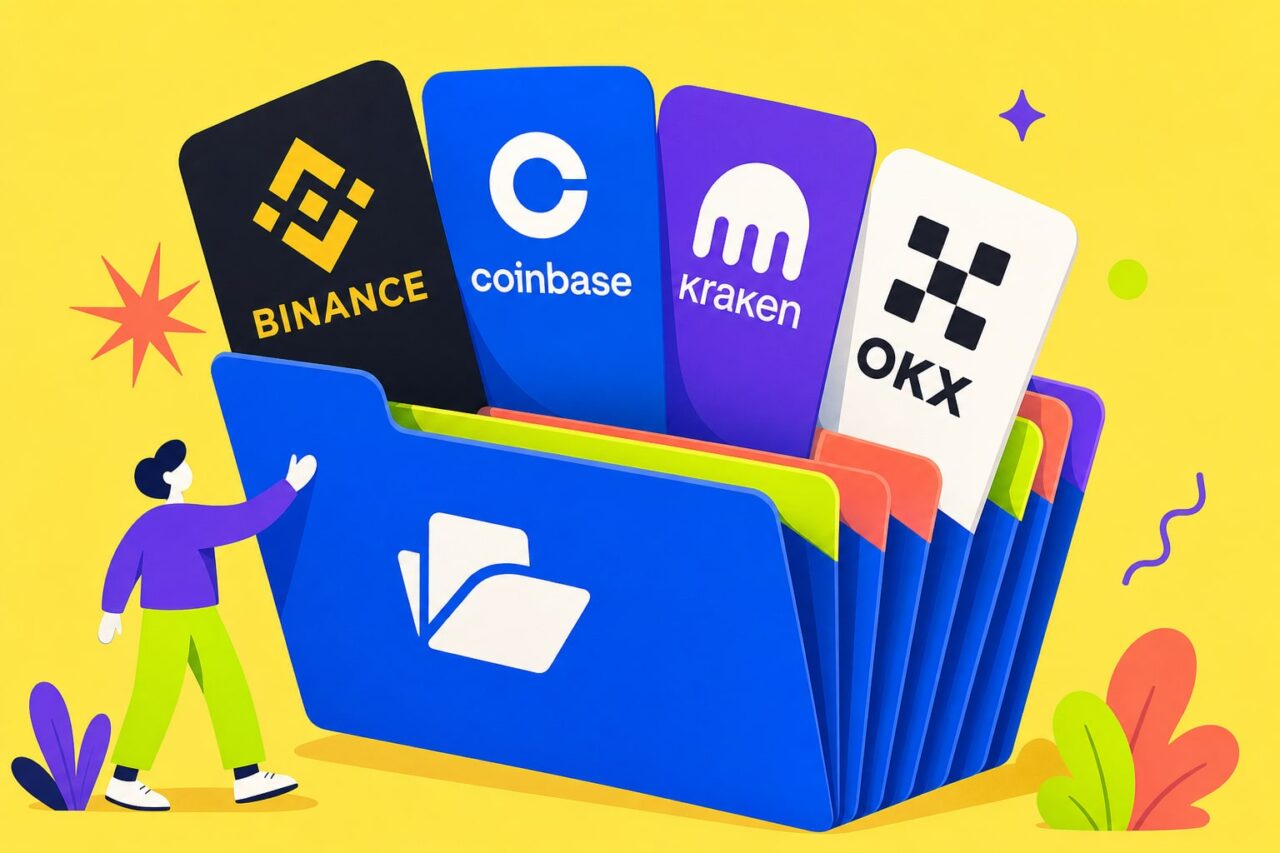
Check out our list of crypto exchanges, which includes centralized exchanges, decentralized exchanges, derivative exchanges, and regional exchanges. We also discuss the features and types of each exchange and provide alternative ways to trade crypto. Exchanges and their features are always changing, so make sure to check the most up-to-date information about fees, products, assets supported, and withdrawal policies.
Using This Directory of Crypto Exchanges
A crypto exchange is only one part of the crypto trading experience, and the best exchange for you depends on the type of trading you do (spot trading, futures trading, self-custody trading, etc.), your features and trading tools needs, your location and acceptable payment methods, and whether you need to be able to trade crypto in the United States.
This directory is designed to help you understand the different types of crypto exchanges and how they are different from one another so that you can make the best decision for your own trading.
Centralized Crypto Exchanges
Centralized crypto exchanges are where crypto trades are managed by a centralized company. This includes the management of your trading account, the order book and the custody of your crypto. In return for this service, centralized exchanges often offer customer support, a user-friendly trading interface, user identity verification, and a variety of funding options. As centralized exchanges hold custody of your crypto assets, they have increased counterparty risk. This means you are reliant on the exchange to properly safeguard your assets, process withdrawal requests, accurately track your crypto balances, and follow all regulations.
Binance
Binance is one of the most popular exchanges in the world. It offers a wide selection of markets for spot trading, high trading volumes and a wide range of crypto trading tools. Note that Binance’s products and services vary by country. If you are in the United States, it is important to check whether a specific Binance entity and product is available in your state.
With Binance, you have access to many different markets and trading interfaces. Make sure you fully understand the fees, trading types, withdrawal policies, and security features before making any deposits.
Coinbase
Coinbase is one of the most popular and well-known exchanges and is known for its easy-to-use interface. It is one of the largest exchanges with a strong presence in the United States. Coinbase offers spot trading and crypto custody solutions. However, the types of assets and the payment methods you can use depend on your location and account type.
Coinbase offers an easy-to-use exchange that many beginners can benefit from. However, you should understand the difference between the interface you trade through and the associated fees and withdrawal policies if you are an advanced trader.
Kraken
Kraken offers a wide selection of markets for spot trading and is known for its strong security features and advanced trading interface. However, just like Binance, the specific products that Kraken offers may differ by jurisdiction. Before using any crypto exchange, be sure to check the security and authentication options, fees, deposit and withdrawal policies, and funding methods.
OKX
OKX is another popular centralized crypto exchange that offers a wide selection of markets for spot trading as well as derivatives. It also offers a number of crypto trading tools and wallet-related products. However, OKX, like other crypto exchanges, has geographical restrictions on its products, which means that the products available to a user in the United States may be different than those in another country.
If you decide to use OKX, be sure to understand the risk of each product you use. Because it offers a wide variety of products, it is easy to make a mistake in your order and suffer losses.
Bybit
Bybit is a popular derivatives exchange that offers crypto perpetual futures trading. It also has a variety of crypto derivatives trading tools and a user-friendly interface. As mentioned, the products offered by Bybit can vary by location. If you want to trade perpetual futures, it is important to understand the risk, which includes the potential for your position to be automatically closed (liquidated) if you do not have enough margin in your account.
Decentralized Crypto Exchanges
Decentralized crypto exchanges, or DEXs, are blockchain-based exchanges. They do not use a centralized company to maintain an order book, but instead use a smart contract to enable users to trade crypto. This type of exchange has less counterparty risk, but you have to be aware of many other risks, including smart contract vulnerabilities, fake crypto tokens, gas fees, and the irreversibility of crypto transactions.
Uniswap
Uniswap is one of the most popular decentralized exchanges. It has automated market maker pools for a wide variety of tokens on a number of different blockchains. Uniswap is a non-custodial exchange, meaning that you will need to connect a crypto wallet that you own the private key for.
Note that with Uniswap, the price of the token you want to swap may change while your transaction is pending. Before executing a trade, be sure to verify the token address, review the amount of slippage you may be willing to accept, and ensure that you are swapping on the correct network with the appropriate wallet connected.
dYdX
dYdX is a popular decentralized exchange that specializes in crypto derivatives. It has a trading interface designed specifically for derivatives trading. The products offered by dYdX and the specific blockchain it operates on can change, and it also has geo-restrictions in some regions. Crypto perpetual futures trading is a high-risk product, and it is important to understand all the risks associated with smart contract trading and futures trading (liquidation, price volatility, and execution risk).
Hyperliquid
Hyperliquid is a decentralized exchange that has on-chain crypto perpetual markets and a more traditional order-book trading interface. When using a DEX, it is important to understand the security of the wallet you are using, the networks it supports, and the general liquidity of the market you are trading. Additionally, you should understand how a DEX like Hyperliquid operates.
Crypto Derivatives Exchanges
Crypto derivatives exchanges allow you to trade derivative products on crypto, such as futures, perpetual futures, and options. With derivatives, you do not necessarily own the underlying asset you are trading.
While some of these exchanges may be suitable for hedging or other sophisticated strategies, it’s worth noting that such markets can also see losses compound quickly. In addition, as with other derivatives, you may be restricted from using certain derivatives products on some exchanges due to regulation and/or geographic location.
Deribit – Options and futures
Deribit is known for offering options and futures markets for cryptocurrencies, including major cryptocurrencies. When trading options, you’ll encounter new terminology such as strike price, expiration, implied volatility, time decay, etc.
Make sure you understand the specifications, settlement terms, margin requirements, fees, and jurisdictional requirements of any derivatives exchange you choose to trade with. Your options position could decrease in value as the market (and/or implied volatility) changes.
Regional Crypto Exchanges
Some crypto exchanges focus on a particular region, be it by country, banking system, language, or regulatory requirements. For example, Gemini is an exchange that focuses on the United States, Bitstamp is a popular exchange for people in certain European countries and other regions, and Coincheck is an exchange in Japan.
Regional exchanges may offer payment rails that global crypto exchanges do not. On the other hand, they may support fewer assets than global exchanges and have stricter requirements regarding identity, banking, and withdrawals.
| Centralized exchange | Assets are custodied by the exchange. Provides a high level of support and trading services such as order books. Typically trades spot assets. You’ll be subjected to KYC requirements, withdrawal limits, etc. |
|---|---|
| Decentralized exchange | Users maintain custody of their assets via a wallet and don’t have to use a centralized exchange’s order book. You’ll be subjected to smart contract risk, gas fees, etc. |
| Derivatives exchange | Trades futures, perpetual contracts, and options. You’ll be exposed to liquidation risk, funding, and other risks. There may be geographic restrictions. |
| Regional exchange | May have local payment rails, may be subject to local requirements. Usually has fewer assets to trade and has stricter requirements regarding identity, banking, and withdrawals. |
- Make sure that the exchange you are trading with is legally allowed to serve your location.
- Check the assets that are available and the fee structure of any crypto exchange you trade with.
- Additionally, make sure you are using secure features such as passkeys or two-factor authentication (2FA).
- Always read the exchange’s disclosures on reserves, custody, and withdrawals.
Key features of crypto exchanges to consider
Having a large asset list is not always an indicator of a good crypto exchange. You might want to consider factors such as liquidity, order execution, security of your account, and ability to withdraw funds, as these are much more important than the number of assets that are listed on an exchange. Here are some factors to consider when comparing crypto exchanges:
- The ability to access the markets you need, whether it’s spot or derivatives
- Liquidity/volume available on the exchange
- Fees and spreads
- Custody (whether you’re comfortable holding your assets on a centralized exchange)
- Security (for example, do they use two-factor authentication?)
- Regulation and KYC
- Past notices regarding service and withdrawals from the exchange
If you’d like to see all of the exchanges in one place, our multi-exchange trading terminal can be accessed here. Additionally, you can access the BuyCrypt markets page here, which contains more information.
BuyCrypt: an alternative to trading on crypto exchanges
BuyCrypt is not an exchange and does not sell cryptocurrency. It is an educational, gamified platform for cryptocurrency trading, where you can participate in free crypto trading tournaments and demo trading contests. Users participate in the simulated balance and price movements using real market data. There is no requirement to deposit any funds to participate in BuyCrypt tournaments, but users can win real USDT prizes if they qualify.
In addition to free trading tournaments, BuyCrypt is also a crypto prop firm, where traders can access prop plans starting from as little as 49 USDT, or free from the success of participating in the BuyCrypt ‘The Ladder’ tournaments. After a trader completes their prop plan, they go through an evaluation to access a $5,000 funded account, with an 80% profit split and USDT payouts on-chain. For a comparison between crypto trading tools and crypto exchange apps, read this article. To learn how to trade on Binance, Bybit and OKX all in one app, check out this guide.
Disclaimer: BuyCrypt is a simulated environment for skill-based trading. There are no guarantees and this does not constitute financial advice.
Frequently Asked Questions
What is the best crypto exchange for beginners?
There is no ‘best’ crypto exchange for beginners. When choosing an exchange as a beginner, you should consider various factors such as user interface, fees, payment methods, security, regulatory availability, supported assets, and withdrawals.
Are decentralized exchanges safer than centralized exchanges?
The two types of exchanges have different types of risk. When using a DEX, users reduce the risk of reliance on a centralized platform but run the risk of smart contract bugs, incorrect wallet usage, fake tokens, slippage, and irreversible transactions.
Can US residents use every crypto exchange?
The availability of crypto exchanges and derivatives exchanges varies by state, exchange, account type, and regulatory requirements. You should check with any exchange you are interested in using to see if they serve your location.
What is the difference between spot trading and derivatives?
Spot trading involves buying and selling assets at market prices. Derivatives are financial instruments whose value is derived from an underlying asset. For example, futures or options. Derivatives products introduce other risks, such as funding, margin, expiration, and liquidation.
Is BuyCrypt a cryptocurrency exchange?
BuyCrypt is not a crypto selling platform. We are a platform that helps you simulate crypto trading tournaments/contests in a demo environment. We don’t sell crypto and you don’t need to deposit anything to participate in our crypto trading tournaments. You can participate in our crypto trading tournaments for free. We provide you with a real crypto trading market data to trade on our platform.
Title tag (SEO title): List of Crypto Exchanges: Types, Features, and Alternatives
Keep reading: the multi-exchange terminal · Markets · Crypto Trading App Vs Exchange App
Discussion
Comments from BuyCrypt Live. Sign in with Google or Apple — we create your BuyCrypt account on the way, the same one as in the app.