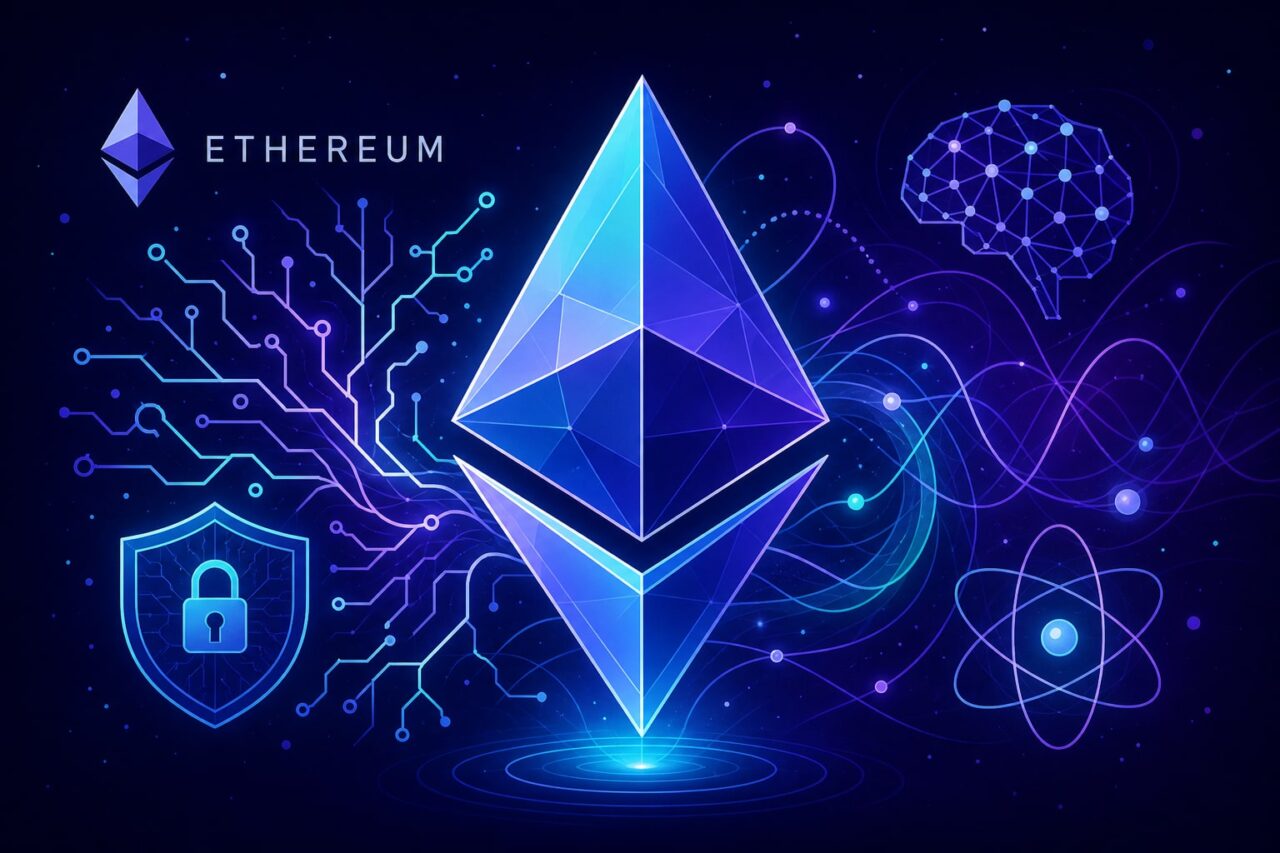
The Ethereum Foundation has accelerated its efforts to address future security concerns that quantum computing and AI could pose to the elliptic curve cryptography used in Ethereum. This move by the Ethereum Foundation is a significant step in its attempts to ensure that Ethereum remains secure in the future.
Quantum and AI Threats to Ethereum’s Security
Experts have warned that quantum computing could pose a threat to the elliptic curve cryptography used in Ethereum. Unchained reports that AI could also be a threat, as it could accelerate the pace at which quantum computing solutions are developed and adopted. At Devcon, an Ethereum researcher named Ben Edgington commented on the current security status by saying it was ‘DEFCON orange’. The Ethereum Foundation is aware that quantum computing and AI could soon render Ethereum’s cryptographic security obsolete.
Hash-Based Signatures: A New Security Paradigm
The Ethereum Foundation is now considering a possible transition to hash-based signatures as a way of protecting against the threat of emerging technologies. While protocols such as HTTPS and SSH have already adopted post-quantum solutions, Ethereum has yet to do so, leaving it in a relatively vulnerable position. However, the switch to hash-based signatures is not an easy one. As pointed out by Unchained, these signature schemes could be up to 100 times larger than elliptic curve options, which would require more data and computing power.
Decentralization and Network Upgrade Challenges
A key concern regarding the Ethereum Foundation’s security upgrades is how this would impact the decentralization of Ethereum. As pointed out by Unchained’s guests, the switch to more demanding signature schemes could require powerful hardware that is beyond the reach of many individuals, centralizing power in the hands of validators. This goes against one of Ethereum’s key principles as a decentralized network. There is also the fact that a switch to these signature schemes would mean that the entire Ethereum ecosystem would have to be updated to accommodate the new standards, a task that would require substantial resources.
AI is also expected to impact the Ethereum upgrade process. According to Unchained, this could result in more frequent hard forks in Ethereum as AI accelerates the rate of development in the protocol. This could also pose a challenge to Ethereum.
Balancing Privacy, Security, and Usability
The Ethereum Foundation is also considering the use of local AI models as a way to improve transaction privacy and security instead of relying on cloud-based AI. The Foundation wants to harness the benefits of AI while at the same time maintaining user sovereignty. This highlights the delicate balance that Ethereum faces when implementing post-quantum security solutions without compromising its usability and decentralization.
Explore how advanced cryptography impacts trading strategies with our risk-free crypto trading simulator. post-quantum security insights.
Read also


Discussion
Comments from BuyCrypt Live. Sign in with Google or Apple — we create your BuyCrypt account on the way, the same one as in the app.