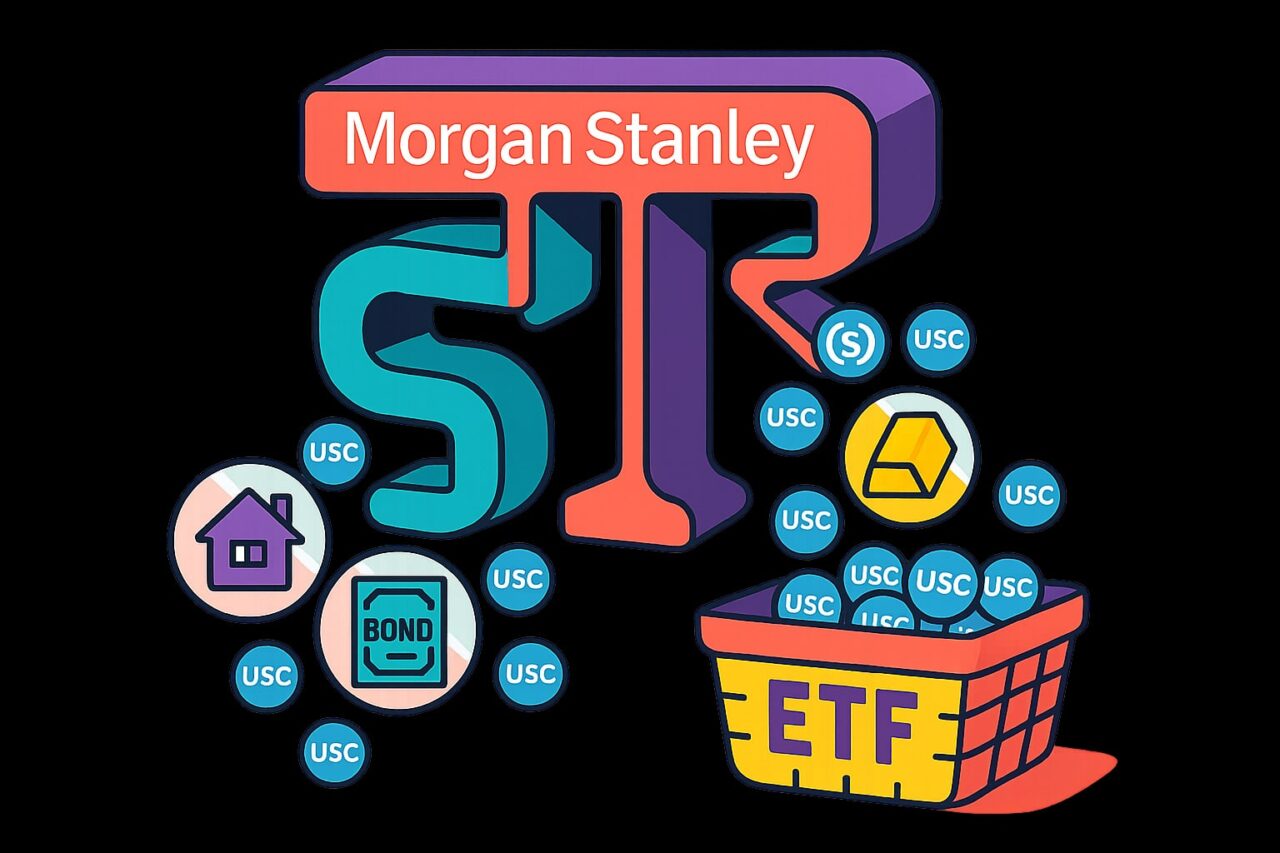
Headlines have been dominated lately by the Morgan Stanley Bitcoin ETF, not least because Amy Oldenburg, who leads Digital Asset Strategy at the bank, has put the spotlight on its deepening involvement with asset tokenization and bitcoin stablecoins.
Why Morgan Stanley Sees Potential in Stablecoins and Tokenization
In a piece for Bitcoin Magazine, Oldenburg was candid about the fact that the bulk of inflows to the ETF are from individual investors as opposed to advisors, an unexpected turn of events in the digital asset world. She made clear that while Morgan Stanley is keeping a close eye on the likes of stablecoins and tokenization as key to any innovation in the space, it is also aware of their transformative power; the market is nevertheless young. That a bank of Morgan Stanley’s stature is showing such interest is indicative of a traditional finance sector more amenable to the efficiencies and transparency blockchain can provide.
Retail Investors Drive Morgan Stanley Bitcoin ETF Growth
There is an appetite among everyday investors for unmediated access to bitcoin and other digital assets, something Oldenburg has observed in the composition of the ETF. It is a sign of how far the democratization of these assets has come, with firms such as Morgan Stanley adjusting to accommodate. In some respects, the retail nature of the ETF’s growth is a measure of the way people are now relating to digital assets; where once one might have gone through an advisor, now there is a desire for direct exposure. The banks are taking note and rolling out products for this new breed of investor.
Expanding Services: Lending and Market Impacts
To that end, Morgan Stanley is set to broaden its lending services, currently based on exchange-traded products (ETPs), to encompass crypto. It is all part of a strategy to serve clients better. For an investor unfamiliar with the space, being able to put up crypto as collateral for liquidity without having to liquidate a position is no small thing in a volatile market.
Oldenburg also drew attention to the link between gold and bitcoin, cautioning that in the face of instability in developing economies the correlation does not always work in bitcoin’s favor. A point to be heeded by those just starting out when it comes to gauging the risks of a crypto investment.
The Future of Tokenization and Financial Innovation
Then there is the matter of tokenization, the conversion of, say, a stock or a piece of real estate into a digital token on the blockchain. As the process becomes more established, Oldenburg sees it as a means to make illiquid or unwieldy assets more accessible and to open up value for both retail and institutional investors. At Tech Week, the conversation turned to how this could be a game-changer, with projections for the market running as high as $3 to $10 trillion by 2030. New projects to tokenize deposits and stablecoins were on display, and with more banks delving into such innovations, one can expect the distinction between what is blockchain and what is conventional finance to become ever less distinct.

Explore how you can practice trading strategies related to Bitcoin ETFs and tokenization trends risk-free with our crypto trading simulator. practice risk-free trading.
Read also

Discussion
Comments from BuyCrypt Live. Sign in with Google or Apple — we create your BuyCrypt account on the way, the same one as in the app.