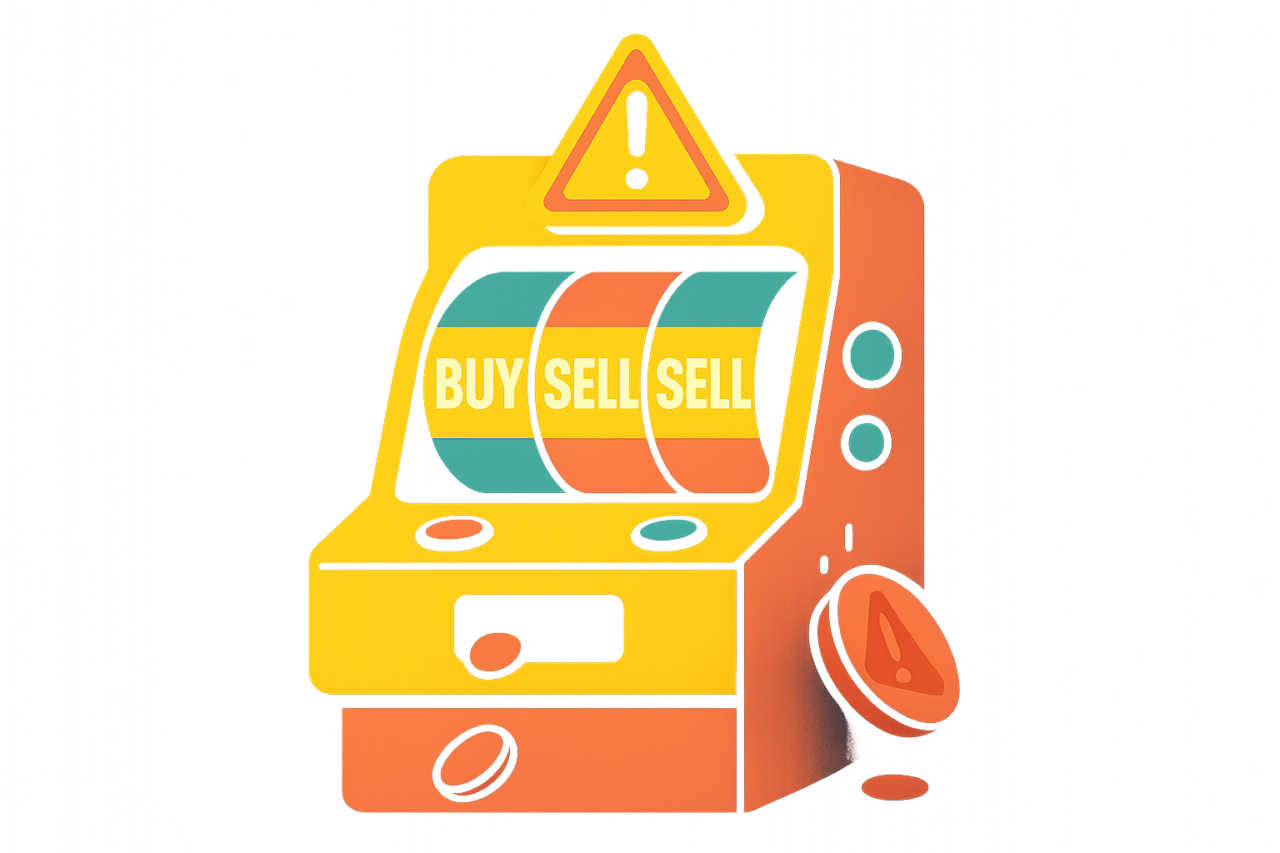
The risks of gamified trading are not hard to spot: there is crypto addiction, over-trading, a propensity to chase losses and act like a gambler. With leverage, volume incentives, rewards and leaderboards on offer, one can be led to make risky calls as though it were all a game. To partake without hazard, firm boundaries must be put in place and a distinction made between a simulated contest and the real thing of putting money on the line.
What constitutes trading gamification?
In short, it is the application of game mechanics to what would otherwise be plain financial activity. The market becomes more of an engagement when there are daily challenges, countdowns, badges, scores and rankings to be had.
There is nothing inherently wrong with that engagement; a demo contest can be a good way to hone your decision-making and discipline. But where the trouble lies is in game mechanics that have you making bigger positions or trading with greater frequency, or after you have taken a loss.
- Leaderboards keyed to profit or volume
- Bonuses for frequent participation
- Rewards for hitting activity targets
- Public performance notifications and rankings
- Time-limited competitions
- Leverage or position-size incentives
They have a way of altering your perception of risk. A trade ceases to be a matter of potential financial loss and starts to seem like a move in some competition.
Over-Trading and the Lure of Competition
A trading competition will often put a premium on what can be seen in a short time frame, which lends itself to behaviour at odds with any normal plan. One may up the size of a position to get ahead of the pack as the contest winds down, another will not put a stop to it after a loss for fear of surrendering. Skill has little to do with either.
- Short-term pressure: Short-term pressure from a limited period will see decisions being made in a hurry.
- Volume incentives: Volume incentives put a value on being active rather than on analysis.
- Loss chasing: Losses are chased with larger risks.
- Social comparison: Another trader’s numbers become a personal challenge by way of social comparison.
- Leverage trading risks: And with leverage, borrowed exposure has the capacity to amplify gains and losses alike.
Then there is the mental fatigue of over-trading. Put in enough decisions and you will find yourself reacting to noise as much as following process. You are no less impulsive for it, even if the market has not in fact become any clearer.
Is Crypto Trading Addictive?
For some it can be. When a win is exciting and a loss is cause to have another go, and price alerts hold your attention, the risk of compulsion is there. And since the crypto markets never close, there are no natural places to put a stop to it; it is easy to be checking your positions in the evening or at work or with family.
You may be dealing with an addiction if you are:
- Putting rent or borrowed money into trades
- Keeping your losses and activity from those around you
- Restless in the absence of a price check
- Up-sizing a trade for the thrill of it
- Letting sleep, work or relations go by the wayside
- Failing to abide by your own limits
- Trying time and again to make back what you have lost
Crypto and problem gambling have much in common, from the uncertainty and variable rewards to the chasing of losses. The fact it is called trading does not negate the behavioural risk.
Should you find it is getting out of hand, put an end to it and consult a professional in mental health or a gambling support service. In the U.S. 1-800-GAMBLER is a resource for state-specific help, subject to where you are.
Are these competitions a form of gambling?
Not per se. It is a question of whether there are entry fees, how the prizes are funded, what the rules are and if users are staking money on an uncertain outcome. There is a difference between a free contest run on simulated capital and one where you have to put up deposited funds or pay to enter. Yet the psychological risk is not absent in the former; habits can become compulsive even if no money is lost in the contest.
| Competition feature | Lower-risk signal | Higher-risk signal |
|---|---|---|
| Capital | Simulated demo balance | Personal or borrowed money |
| Entry | Free | Repeated paid entries |
| Results | Rules based on skill | Randomised or opaque scoring |
| Trading | No financial exposure, just live data | Live leveraged positions |
| Limits | Account boundaries and fixed duration | Constant access, stakes that escalate |
| Rewards | Prizes and terms are transparent | Bonuses that put you under pressure to trade |
The question to pose is a simple one: are you at it for the excitement and to chase something uncertain, or to exercise a repeatable skill? The answer could well depend on the format.
The Psychology of Leaderboards
By their nature leaderboards make a private matter public. While this can be motivating, it also brings with it a fear of being left behind and a desire for sensation.
It will show you the top performers but not the risk they took to get there. You might have a trader who has put on a concentrated position and is high on the board, and another whose returns are more modest but come with far less exposure. It is a false lesson to think the biggest outcome is the best process. What one sees could be put down to luck or a degree of risk that would not be tolerated in any other context.
There is an intensity to the psychology of trading on a leaderboard when the rankings are in a state of flux and notifications are heralding every change of position, or when the contest is drawing to a close and the rules put a premium on raw return to the exclusion of drawdown.
One can adopt a more prudent course by making a habit of recording one’s process: the reason for entering a trade, the amount of risk taken, and if you have been true to your own rules. A rank is of little consequence; a fortunate outcome is no cover for bad decisions.
Contest Payouts: The Reality
Prop-firm type programs and some competitions will tout large volume or fast returns. Their marketing has a way of making payouts look like a formality, yet it is the rules that dictate eligibility.
Make sure to read the terms. Look at what is required in the way of minimum activity, maximum drawdown, verification, and restrictions on accounts or where you are located, as well as the timing of any payout and which strategies are off limits. An infraction can see a strong showing on the leaderboard come to nothing in a review and put pressure on the trader to do even more.
Then there is the matter of distinguishing a live result from a simulated one. With a demo balance you are spared the direct loss of market value but none of the execution and emotional difficulties of putting up your own money. Live markets will present their own slippage, fees, order delays and stress.
Do not put borrowed money towards a contest prize. The debt is a certainty, the prize is not.
Competing Safely
The first rule of a safe competition is to have set your boundaries before you make a trade, and while you are still calm, not after a loss has clouded your judgment.
- Where you can, use simulated capital.
- Impose a time limit on your sessions.
- Know in advance what loss or drawdown you will countenance.
- Be consistent with your position sizing.
- Leave high leverage and borrowed funds alone.
- Once you have hit your personal loss limit, stop.
- There is no need to add risk for the sake of climbing the leaderboard.
- Make a note of your trades and have a look back at them when the contest is done.
- Take some time between sessions.
- Don’t hesitate to walk away if it becomes compulsive.
Say you have a virtual balance in a demo contest: resolve to put only a small, unvarying portion of it at risk per trade. It is not so much the percentage as your refusal to alter it in the wake of a run of losses.
Have rules in place to make it easy to disengage. Turn off the platform if it is sending out a stream of notifications. If you find yourself fixated on the rankings, confine your review of performance to once or twice a day.
Practicing in a Safer Manner
With BuyCrypt one can enter free crypto tournaments and demo contests that are run on real market data. There is no deposit to be made to compete for USDT prizes.
BuyCrypt does not act as an exchange for the buying and selling of crypto; think of it as an educational space, a bit of a game, to test your decisions without having to put your trading capital on the line.
While the simulation takes the sting out of financial exposure, it is not without risk. You may still find yourself spending too much time or forming bad habits in the constant checking of the market.
A demo should be a disciplined affair. Have a schedule, put process ahead of rank and examine your drawdown. Should you become angry or feel you cannot leave, do so. Regard any USDT as a reward that is not to be counted on.
For tracking purposes some will find a Trader Passport of use. Such a tool ought to foster self-awareness, not put you to the trade more often.
Some Final Rules
The incentives of gamified trading warrant a hard look. A top spot on the leaderboard is no guarantee of a sound strategy, nor does a winning streak mean risk was handled properly.
The best format is one with firm limits of your own making, transparent rules and no deposit, using simulated capital. When it ceases to be educational and becomes something you feel you must do, then go. Your mental health and your money are worth more than a ranking.
FAQ
Is there an addictive quality to gamified crypto trading?
It can lead to compulsion, particularly with the rapid feedback and leaderboards and the urge to chase a loss. Be on the lookout for broken limits, sleep problems and trading with money you can ill afford.
In what way are they like gambling?
Not always. A free contest of skill on a simulator is a different proposition to one where you have to put up your own funds. The level of uncertainty and the rewards are all part of the equation.
What about leverage in a contest?
It is a high risk feature, not a means to get higher up the ranks. Leverage will magnify any losses and can inculcate poor habits even in a simulated setting.
How can I avoid over-trading?
Over-trading is something to be avoided. The way to do that is with a set session length and uniform position sizing; put a cap on the number of trades you put on and put an end to it once your loss limit has been reached. There is no point in trading on account of a shift in your leaderboard standing, so turn off any superfluous alerts.
BuyCrypt explained
In short, BuyCrypt is where one can find demo trading contests and crypto trading tournaments at no cost. It is not an exchange for the purchase or sale of cryptocurrency. Rather, the platform puts you in a simulated environment with real market data and there are USDT prizes to be won, no deposit required.
Related on BuyCrypt: join the demo contest · Trader Passport · Trading Competitions/

Автор Benjamin Redfern
I was born in 1979 in Dunedin, New Zealand, where cold mornings, steep streets, and strong opinions about rugby were part of ordinary life. I use Benjamin Redfern as my public name. My private identity remains known only to close family and long-standing friends.
Discussion
Comments from BuyCrypt Live. Sign in with Google or Apple — we create your BuyCrypt account on the way, the same one as in the app.