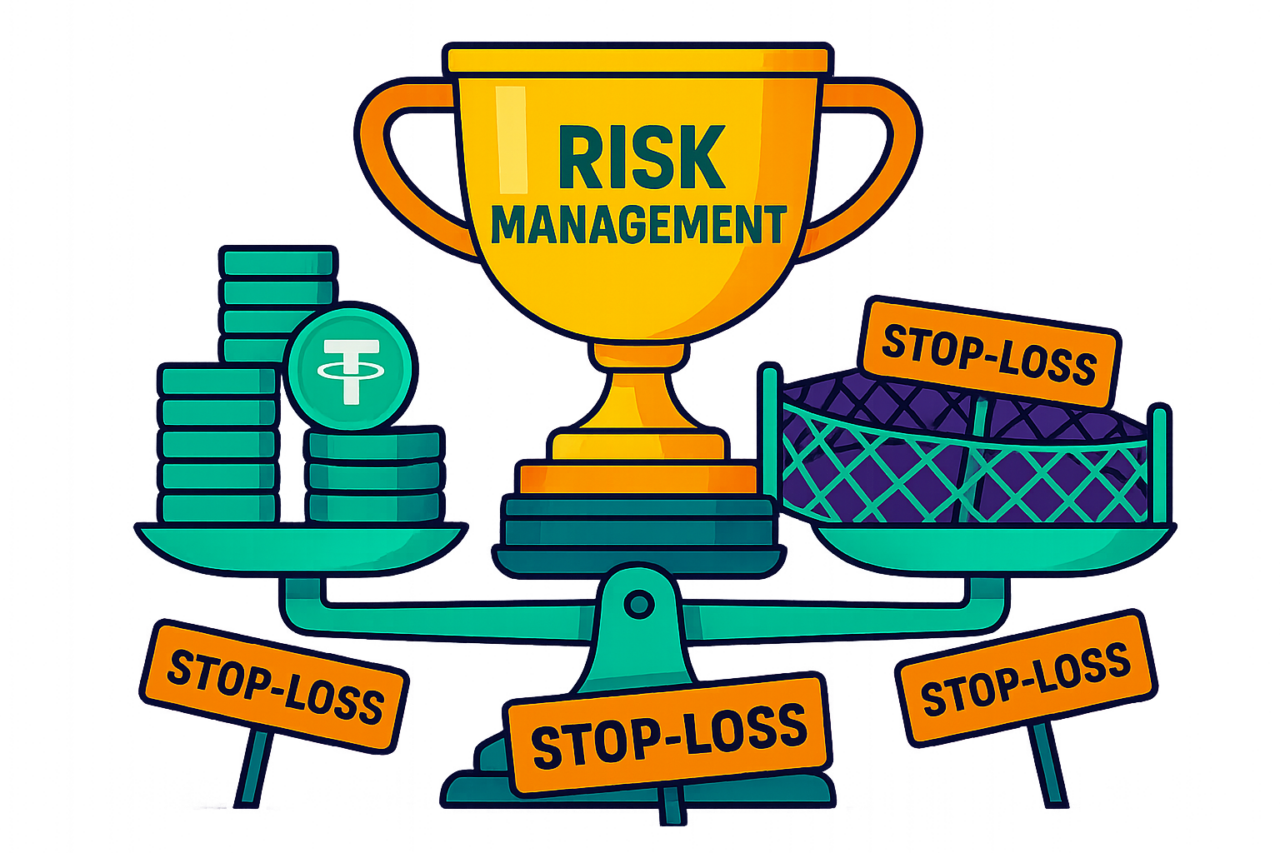
There is a fine line between a payout and a wiped-out balance by the second hour of a BuyCrypt event. The platform’s leaderboard is for those who put capital protection first, not for the ones who put it on the line. What follows is a look at the nuts and bolts of that — from drawdown to position sizing, and why being consistent will always be better than a one-off stroke of luck. (Keep in mind: this is a simulated, skill-based environment; no promises of profit are made here.)
Luck has little to do with it
You would be hard-pressed to find a winner in these 54 or so weekly BuyCrypt tournaments who got there by simply riding the biggest pump. The data tells a different story. We have put out $384K and 127 funded accounts so far, and if you look at the traders who made it, they are the ones who never let a trade put their entire balance in jeopardy.
In a competition, time is of the essence. You are in a room with other players, all in the same markets at the same time, and the board can turn on a dime. Put 50% of your equity into a leveraged bet and you are no longer in a contest; you are making a hasty call with a clock ticking. The only way to make it up the ranks is to stay in the game.
That is where the theory of risk management becomes very practical. With a set balance and a running clock, every move is a calculation of what you can put on the table versus what you can spare before you are done for.
The numbers don’t lie
Drawdown is the metric that matters. It is the distance from your high to your low, and the math is as it is. A 10% loss requires an 11% gain to make up for it. Go down 25% and you are looking at 33%. If you are 50% in the hole, you have to double up just to get back to where you were. Each point of drawdown makes the rest of the tournament harder.
Before you even start, put a number on the table for how much you are prepared to give up and stick to it. Some like to use a daily cap: when the session has taken its toll, you walk away and let the next day clear your head. It is the best way to avoid the kind of overtrading that leads to a quick end.
It also puts the leaderboard in perspective. A top spot is of little value if it is one wick away from vanishing. It is better to be in the middle of the pack with some cushion to work with.
Control what you can
You have no say in whether a trade is a winner, but you have complete say in how much you put behind it. The rule of thumb is to determine the most you can part with on any given position — we are talking 1-3% of your balance — and then build the size around that. Do it in reverse: start with the stop-loss and see what you can afford.
Do the math. Your risk in dollars, divided by the room between your entry and your stop, gives you your size. A broader stop calls for a smaller position; a narrow one allows you to be more aggressive without adding to your exposure. This is why you set the stop and let it run the show, instead of the other way around. Leverage is just a tool to hit your risk target, not an excuse to go over it.
And for the record, doing it the same way every time makes for results that are easy to read. A well-constructed equity curve is a true measure of your edge, not the after-effects of an overzealous bet. When you put down the same amount of risk on every trade, the numbers tell the right story. A good scoring system is there to make sure of it.
The case for PMC: consistency, not gambling
BuyCrypt has a way of running its tournaments with Position Movement Change (PMC) in the mix with PnL and ROI. The reason for this is simple: we don’t want one ill-advised wager to put someone at the top of the board. If you score on raw profit alone, you are essentially giving a pass to those who will use maximum leverage and go all-in on a hunch. One stroke of luck can put them ahead of a hundred more methodical traders. It’s not fair to the skilled ones or to the contest itself.
With PMC in the equation, the focus is on how you handled your positions from start to finish. We like to see the kind of steady, measured compounding that comes with a shallow drawdown. A trader who has one big spike and then folds isn’t going to be given the same marks as one who shows restraint. The score follows the process, not just the high point.
It’s a relief to know you don’t have to pull off a hero trade to come out on top. There is a better way to work your way up the standings: by being disciplined with your risk. The very things that keep you from self-destructing are what the system is set up to put on the board.
Some rules of the road
Make a checklist and stick to it. Your per-trade risk should be a set figure; don’t improvise. Put in a stop-loss before you open a position and let that dictate the size. You also have to put a lid on your total exposure. In crypto, a bunch of correlated assets can turn on you at the same time, and you don’t want to be left with a hole you can’t dig out of. Risk aggregation techniques help quantify and control your total exposure across multiple correlated crypto assets effectively.
Have a daily loss limit and when you reach it, you’re done. The clock will be there in the morning and a level head is a better asset than a forced entry. And don’t be the one piling on leverage in the waning hours to try and nudge up your rank. That is how you squander a good run. A solid place in the standings is worth more than a marginal one won on a whim.
Since you are trading on a demo balance at BuyCrypt, there is no downside to putting these habits to the test while you are in the running for USDT. Run some free, no-deposit tournaments to make your sizing and stops second nature before you get to the part where the money is real.
From the tournament to a funded account
What gets you through a contest is what will see you through with a live book. Earning a $5,000 funded account with an 80% split from us is not a matter of chance. It is a continuation of the discipline you showed in the ring. Funded accounts come with their own limits on how much you can give back, and the ones who last are the ones who respect that line.
Treat the competition like a dress rehearsal. Every time you base a position on your stop rather than your feelings, or you say no to an all-in, you are training for the long haul. We have paid out $384K to 127 funded accounts over 48 events. None of it was to the loudest gamblers. It went to the ones who knew that in our world, staying in the game is the plan.
You could call it the unglamorous side of a crypto contest, but risk management is the game. Keep your drawdown in check, be deliberate with your size and let the scoring do its job. It gives you something a pure gambler never has: the ability to be around when the payout comes.
FAQ
What is the number one risk metric in a crypto contest?
Drawdown. It is the distance from your peak to your trough. The math is unforgiving: a 50% hit requires a 100% return to even up. So you control your max drawdown to stay in the hunt. Make sure you have a floor and a daily cap in place.
How much of my balance should I put on the line for a single trade?
Stick to a 1-3% rule for any given trade. It is the sort of discipline that will see you through. The way to do it is to put down your stop-loss, then work out the position size so that if the stop is hit, the cost is no more than what you have pre-determined. One poor trade should not be in a position to put your entire run in jeopardy.
What’s the math on sizing a position?
You take your risk in dollars and divide it by how far your entry is from the stop. If the stop is wide, the position has to be smaller; make it tighter and you can be more aggressive with the same level of risk. The point is to let the stop set the size, not the reverse.
And why is PMC a factor in all this?
We score Position Movement Change (PMC) right up there with PnL and ROI. It is to ensure a haphazard, all-in wager doesn’t just buy its way into the lead. Instead, we are looking at how you have been running your positions over the course of the event. In many cases, a steady hand is a better way to win than putting everything on one hero trade.
Is there a way to get some practice in without putting your own capital on the line?
There is. With our BuyCrypt tournaments you are working with a demo balance, yet the USDT paid to the top is real. We also have free events with no deposit needed. It is a good way to ingrain the habits of proper stop-loss and sizing before you go for a funded account. Everything is skill-based and simulated, of course.
What about when you are in the home stretch of a tournament and the pressure is on?
The temptation is to pile on the leverage for a bit of extra rank. Don’t. A solid standing is worth more than a risky one. Stay within your per-trade and daily limits to the very end. You have to be in the game to be in a position to collect.
Related on BuyCrypt: the BuyCrypt prop firm · play a free tournament · the trading challenge
Every major exchange tournament: what is live now, announced vs distributed prize pools, history since 2020. Updated nightly.

Автор Benjamin Redfern
I was born in 1979 in Dunedin, New Zealand, where cold mornings, steep streets, and strong opinions about rugby were part of ordinary life. I use Benjamin Redfern as my public name. My private identity remains known only to close family and long-standing friends.