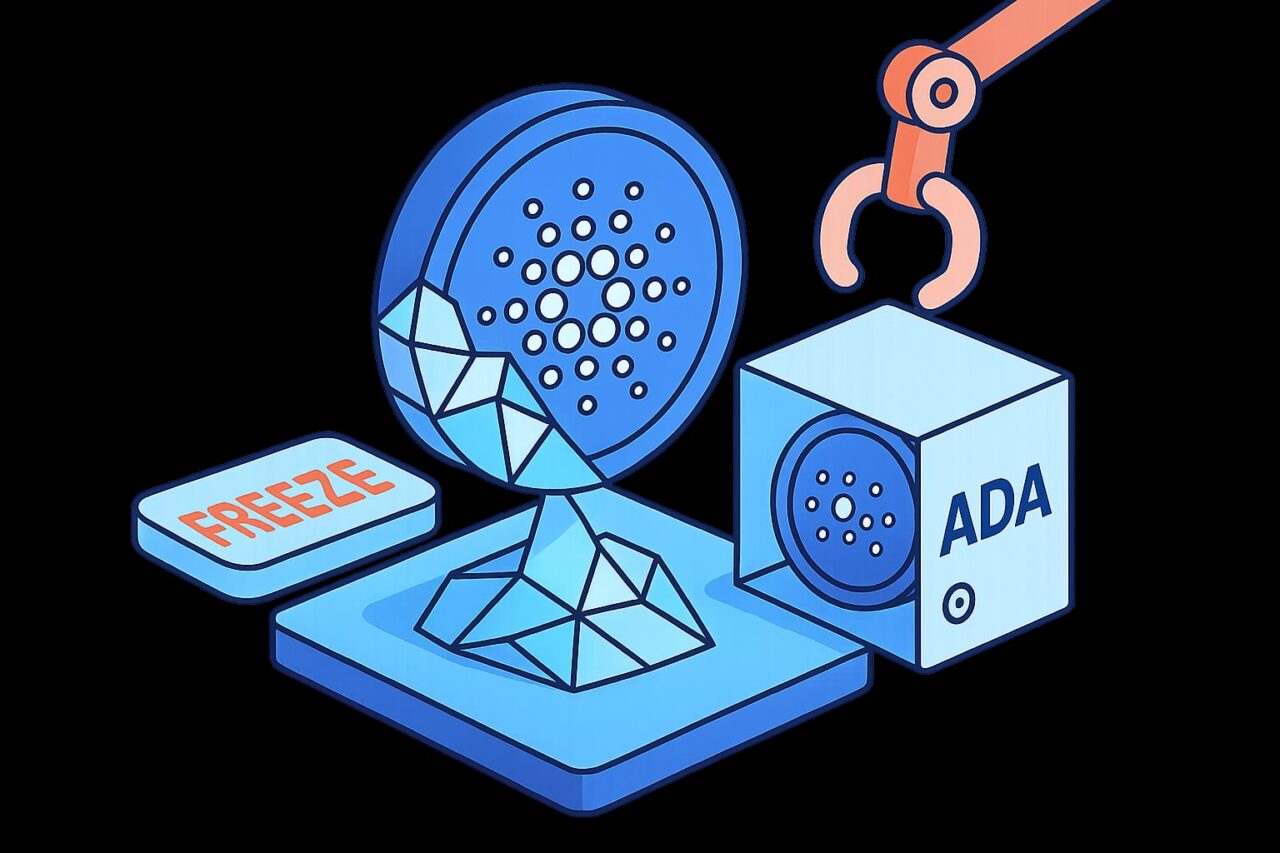
With the advent of SIP-0113, Cardano’s token standard is now operational and gives issuers the means to freeze or take possession of assets in line with what regulators require. It is a decision from the Cardano Foundation that has not failed to provoke some discussion on the subject of control versus decentralization in crypto.
What SIP-0113 Means for Asset Issuers
SIP-0113 was put in place by the Foundation to put the power of asset distribution in the hands of issuers, whether they are stablecoin makers, bond distributors, or fund managers; should the rules of the land require it, they can effect a seizure or a freeze. In an age when the vast majority of tokens are at the disposal of any holder to send to any address, Digital Asset News notes that this is something of a break with convention. The standard is a response to the kind of regulatory headwinds institutional players encounter with tokens that are wholly decentralized.
Institutions are thus able to confine transfers to parties that have cleared their KYC or are not tied to a sanctioned address in Iran, for instance, all in the name of anti-money laundering and other international sanctions. Such provisions are indispensable for an institution bound by the letter of the law and may well make Cardano more of an option for traditional finance, according to the latest from Digital Asset News.
Compliance Versus Decentralization: The Core Debate
Then again, the prospect of an issuer being able to freeze and seize at will is a double-edged sword. It affords them the ability to act on a court or regulatory order and keep up with legal standards. That, in turn, could open the door to Cardano for regulated bodies like banks and funds which must conform to the same demands as conventional financial products.
But one does not have to look hard for detractors who see this as an affront to the decentralization that is supposed to underpin the sector. The host of Digital Asset News points out that it is a centralization of power for the issuer and a possible prelude to less autonomy for the user. Censorship resistance and trustless transfers are what some in the community hold dear, and they may find little appeal in Cardano’s new approach.
Potential Impact on Cardano’s Adoption and Reputation
Having been through its independent security audits, SIP-0113 is live on the network and the blockchain is in a position to attract the kind of capital and markets that are regulated. A pragmatic step that could serve to set Cardano apart as a compliant platform and stave off regulatory trouble, according to the report. Still, there is the possibility that in yielding to the need for asset control, Cardano will lose some standing with the diehard crypto set for whom decentralization is paramount. How it strikes a balance with the ethos of a permissionless network will be seen when SIP-0113 is tested in the real world.
Every call by Digital Asset News and how it played out — in the BuyCrypt bloggers tracker.
Source — Digital Asset News: https://www.youtube.com/watch?v=282uInw8sAE
Discover how decentralized asset control impacts trading opportunities with our funded accounts. Explore our prop firm.
Discuss this article in BuyCrypt Live. Comments appear here automatically.